
Rugby demands a unique blend of strength, speed, and endurance, necessitating a tailored training approach. Italian rugby,
particularly women’s rugby, is experiencing growth, highlighting the need for structured programs. Collaborations, like those in Sicily,
emphasize development, while forums seek team connections, all pointing to a rising interest in optimized preparation.
The Demands of Rugby
Rugby presents an exceptionally high-demand sport, requiring athletes to possess a multifaceted skillset. Players must exhibit explosive power for tackling and sprinting, coupled with substantial strength to compete in scrums and mauls. Endurance is paramount, as matches demand sustained high-intensity effort with minimal rest periods. The Italian rugby landscape, witnessing growth in both men’s and women’s participation – evidenced by increasing 6 Nations involvement and regional development – underscores the need for comprehensive conditioning.
Furthermore, agility and spatial awareness are crucial for evading defenders and exploiting opportunities. The collaborative spirit seen in Sicilian rugby, with teams like Ragusa and Syrako uniting, reflects a shared commitment to raising standards. Online forums demonstrate a desire for team connections and improved training resources. A robust rugby workout program must address all these demands to optimize performance and mitigate injury risk, preparing athletes for the physical and tactical challenges of the game.
Why a Specific Workout Program is Crucial
Generic fitness routines simply won’t suffice for rugby players; the sport’s unique demands necessitate a highly specialized approach. Without a tailored rugby workout program, athletes risk developing imbalances, increasing injury susceptibility, and failing to reach their full potential. The growth of Italian rugby, particularly the rising participation of women, highlights the need for structured development pathways. Regional initiatives and team collaborations, like those observed in Sicily, demonstrate a commitment to improvement.
A specific program ensures all energy systems are adequately trained – from explosive bursts to sustained endurance. It also addresses the specific muscle groups crucial for rugby-related movements. The online search for teams and training resources, as seen in various forums, indicates a player base actively seeking optimized preparation. Ignoring this need can hinder performance and limit the benefits of on-field training, ultimately impacting team success.

Essential Components of a Rugby Workout
A comprehensive rugby program integrates strength, endurance, and power. Italian rugby’s growth and collaborative efforts necessitate a holistic approach to athlete development and conditioning.
Strength Training for Rugby Players
Strength training forms the bedrock of a successful rugby player’s physique, demanding a focus on both maximal strength and functional power. Exercises should mimic the demands of the game – think tackling, scrummaging, and mauling. Key movements include squats (back and front), deadlifts, bench press, and overhead press, building a strong foundation.
However, simply lifting heavy isn’t enough. Rugby requires strength with speed. Incorporate variations like power cleans and snatches to develop explosive power. Unilateral exercises, such as lunges and single-leg Romanian deadlifts, are crucial for addressing imbalances and improving stability – vital for preventing injuries on the field. The increasing participation in Italian rugby, particularly amongst women, underscores the need for tailored strength programs addressing specific biomechanical needs. Remember, a well-rounded program considers all muscle groups, ensuring balanced development and minimizing the risk of overuse injuries. Consistent progression and proper technique are paramount.
Cardiovascular Endurance for Rugby
Rugby is an intermittent sport, demanding both aerobic and anaerobic endurance. A robust cardiovascular system allows players to repeatedly sprint, tackle, and maintain intensity throughout a match. Training should incorporate a blend of continuous running (low-intensity steady state) and high-intensity interval training (HIIT).
Longer runs build an aerobic base, while interval sessions – short bursts of maximal effort followed by recovery periods – mimic the game’s stop-start nature. Shuttle runs and agility drills further enhance cardiovascular fitness and improve movement efficiency. The growth of rugby in regions like Sicily and the increased participation of women highlight the need for adaptable conditioning programs. Don’t neglect recovery; active recovery sessions, like light jogging or cycling, aid in muscle repair and reduce fatigue. Monitoring heart rate and perceived exertion can help optimize training intensity and prevent overtraining, ensuring peak performance on game day.

Plyometrics for Explosive Power
Plyometrics are crucial for developing the explosive power required for tackling, sprinting, jumping, and rucking in rugby. These exercises utilize the stretch-shortening cycle, enhancing muscle reactivity and force production. Common plyometric drills include box jumps, depth jumps, bounding, and medicine ball throws.
Implementing a progressive overload approach is vital; start with low-intensity exercises and gradually increase the height, distance, or resistance. Proper technique is paramount to prevent injuries. The increasing popularity of rugby, particularly amongst women, necessitates programs that cater to varying levels of athleticism. Integrating plyometrics alongside strength training maximizes power output. Remember to prioritize adequate rest and recovery between sets and sessions. Consider incorporating agility drills to translate explosive power into game-specific movements, mirroring the dynamic demands observed in collaborative team efforts like those in Sicily.
Warm-up and Cool-down Routines
Effective routines are vital for injury prevention and performance enhancement, mirroring the growing focus on rugby development in Italy and team building efforts.
Dynamic Stretching for Pre-Workout
Prior to any rugby-specific training session, dynamic stretching is paramount. Unlike static stretching, which involves holding a stretch, dynamic stretches utilize controlled movements to increase range of motion and prepare muscles for exertion. This approach mimics the actions required during a match, enhancing neuromuscular readiness.
Examples include leg swings (forward, backward, and lateral), arm circles, torso twists, and walking lunges with a twist. High knees and butt kicks are also excellent for activating key muscle groups. The goal isn’t to stretch to the point of discomfort, but rather to gradually increase mobility and blood flow.
Considering the growth of rugby, particularly women’s rugby in Italy, and the increasing emphasis on structured training programs, incorporating dynamic stretching is crucial. It aligns with the broader aim of optimizing player performance and minimizing injury risk, mirroring the collaborative spirit seen in regional rugby development.
Static Stretching for Post-Workout
Following a rigorous rugby training session, static stretching plays a vital role in recovery and flexibility enhancement. This method involves holding each stretch for 20-30 seconds, allowing muscles to lengthen and reduce tension. It’s best performed when muscles are warm, maximizing their pliability.
Effective static stretches for rugby players include hamstring stretches, quadriceps stretches, calf stretches, and shoulder stretches. Focusing on major muscle groups used during play aids in restoring optimal muscle length and preventing post-exercise soreness. Deep, controlled breathing during each stretch further promotes relaxation.
Given the increasing participation in rugby, as evidenced by the growth of women’s rugby and regional team formations, prioritizing post-workout recovery is essential. Static stretching, alongside other recovery methods, contributes to long-term athletic development and injury prevention, supporting the collaborative spirit within the sport.
Importance of Foam Rolling
Foam rolling, or self-myofascial release, is a crucial component of a comprehensive rugby recovery strategy. It helps to alleviate muscle tightness, improve flexibility, and enhance blood flow – all vital for players enduring the physical demands of the sport. Applying pressure to specific muscle groups with a foam roller can break down adhesions and knots, restoring optimal muscle function.
Target areas for rugby players include the quadriceps, hamstrings, calves, glutes, and back. Consistent foam rolling, even outside of formal training sessions, can significantly reduce the risk of injury and improve performance. The growing interest in rugby, seen through team collaborations and forum discussions, underscores the need for proactive recovery methods.
Integrating foam rolling into a rugby workout program, alongside stretching, supports the increasing number of participants, particularly within the expanding women’s game, ensuring sustained athletic capability.
Workout Program Structure
A phased approach – pre-season, in-season, and off-season – is essential for optimal rugby conditioning. This mirrors the evolving landscape of Italian rugby development.
Phase 1: Pre-Season Conditioning
The pre-season phase, typically spanning 6-8 weeks, focuses on building a robust athletic foundation. This initial stage prioritizes general physical preparedness (GPP) before transitioning to rugby-specific demands. Emphasis is placed on high-volume, low-intensity work to improve cardiovascular endurance and muscular strength. Long, slow distance running, coupled with bodyweight circuits, forms the cornerstone of this phase.
Strength training should concentrate on foundational movements – squats, deadlifts, bench press, and overhead press – utilizing moderate loads and higher repetitions. Core stability work is crucial, incorporating exercises like planks, Russian twists, and medicine ball throws. Flexibility and mobility are addressed through dynamic stretching routines. The goal isn’t peak performance yet, but rather to establish a base level of fitness and resilience, mirroring the collaborative spirit seen in emerging Italian rugby programs, and preparing players for the rigors ahead. This phase sets the stage for more intense, sport-specific training later on.
Phase 2: In-Season Maintenance
During the competitive season, the focus shifts from building fitness to maintaining it while managing player fatigue. Training volume decreases significantly, replaced by higher-intensity, rugby-specific drills. Sessions are shorter and more focused on skill refinement and tactical preparation. Strength training transitions to maintenance lifts, utilizing heavier loads with lower repetitions to preserve muscle mass and power.
Cardiovascular work becomes intermittent, mirroring the stop-start nature of a rugby match – think high-intensity interval training (HIIT) and shuttle runs. Recovery becomes paramount, with active recovery sessions, foam rolling, and adequate sleep prioritized. The aim is to prevent deconditioning and minimize injury risk, acknowledging the increasing participation, particularly amongst women, as seen in Italian rugby. Monitoring player load and individualizing training programs are essential to navigate the demands of a competitive schedule, ensuring players remain fresh and perform optimally.
Phase 3: Off-Season Recovery & Building
The off-season provides a crucial opportunity for complete physical and mental recovery, alongside building a foundation for future gains. Initial weeks prioritize active recovery – low-intensity activities like swimming or cycling – to flush out metabolic waste and address any nagging injuries. Gradually, training volume increases, focusing on addressing imbalances and weaknesses identified during the season.
Strength training becomes the cornerstone, employing a hypertrophy-focused approach to build muscle mass. This phase allows for experimentation with new exercises and training techniques. Cardiovascular endurance is rebuilt progressively, preparing the body for the demands of pre-season. The growing interest in rugby, evidenced by increased female participation and collaborative initiatives in regions like Sicily, necessitates a robust off-season program to support sustained performance and prevent burnout. Proper nutrition and hydration remain vital throughout this rebuilding phase.
Specific Exercises for Rugby Players
Targeted exercises build rugby-specific strength and power. Italian rugby’s growth, alongside team-seeking forums, underscores the need for focused training regimens to enhance athletic capabilities.
Lower Body Strength Exercises
Developing robust lower body strength is paramount for rugby players, influencing tackling power, sprinting speed, and overall game endurance. Key exercises include squats – both back and front – to build foundational strength in the quads, glutes, and hamstrings. Lunges, incorporating variations like walking lunges and reverse lunges, enhance unilateral strength and balance, crucial for navigating dynamic gameplay.
Deadlifts are essential for posterior chain development, improving power and reducing injury risk. Romanian deadlifts specifically target the hamstrings and glutes. Plyometric exercises, such as box jumps and squat jumps, build explosive power, vital for impactful tackles and rapid acceleration. Calf raises strengthen the lower legs, contributing to stability and preventing ankle injuries. The increasing participation in Italian rugby, particularly amongst women, highlights the importance of accessible and effective strength programs. Remember to prioritize proper form over weight to maximize benefits and minimize the risk of injury, mirroring the dedication seen in collaborative rugby initiatives.
Upper Body Strength Exercises
A strong upper body is critical for rugby players, contributing to tackling, rucking, mauling, and passing proficiency. Bench press, both flat and incline, builds chest and shoulder strength, essential for dominant contact. Overhead press develops shoulder stability and power, vital for contesting high balls and executing effective tackles. Pull-ups and chin-ups strengthen the back and biceps, improving pulling strength for rucking and mauling scenarios.
Rows, utilizing dumbbells or barbells, further enhance back strength and posture. Push-ups, with variations like diamond push-ups, build chest, shoulder, and tricep strength. Exercises targeting the rotator cuff, such as external rotations, are crucial for shoulder health and injury prevention. The growth of rugby in Italy, evidenced by increased female participation and regional collaborations, underscores the need for comprehensive upper body conditioning. Prioritize controlled movements and proper form to maximize gains and minimize injury risk, mirroring the structured approach seen in developing rugby programs.
Core Strength and Stability Exercises
A robust core is foundational for rugby performance, acting as the link between upper and lower body power. Planks, in various forms (standard, side, with leg lifts), build isometric strength and endurance, crucial for maintaining body position during tackles and rucks. Russian twists, utilizing a medicine ball or weight plate, develop rotational core strength, vital for twisting and turning movements.
Dead bugs enhance core stability and control, improving the ability to resist unwanted movement. Bird dogs challenge core stability while promoting coordination. Wood chops, performed with a cable machine or resistance band, build anti-rotation strength. The increasing participation in Italian rugby, including women’s leagues and regional partnerships, highlights the importance of a strong core for all players. Focus on controlled movements and proper technique to maximize core engagement and minimize the risk of injury, mirroring the dedication to development seen across the sport.

Nutrition for Rugby Performance
Fueling the body correctly is paramount; optimal nutrition supports intense training and recovery. Growth in Italian rugby necessitates attention to dietary needs for peak athletic output.
Macronutrient Requirements
Rugby players require a carefully balanced macronutrient intake to support the demands of their sport. Carbohydrates are the primary fuel source, crucial for powering high-intensity bursts and maintaining endurance throughout matches and training sessions. Approximately 6-10 grams of carbohydrates per kilogram of body weight daily is generally recommended, adjusting based on training load.
Protein is essential for muscle repair and growth, vital for recovering from intense collisions and building strength. A daily intake of 1.6-2.2 grams of protein per kilogram of body weight is advised. Focus on lean protein sources like chicken, fish, and beans.
Fats, while needed in moderation, provide essential fatty acids and support hormone production. Aim for 20-30% of total daily calories from healthy fats, such as those found in avocados, nuts, and olive oil. The increasing participation in Italian rugby, particularly among women, underscores the importance of tailored nutritional strategies for all athletes.
Hydration Strategies
Maintaining optimal hydration is paramount for rugby players, directly impacting performance and reducing the risk of injury. Dehydration can lead to decreased strength, endurance, and cognitive function – all critical in a demanding sport like rugby. Players should proactively hydrate throughout the day, not just during training or matches.
Before exercise, consume approximately 5-7ml of fluid per kilogram of body weight. During activity, aim for 150-350ml every 15-20 minutes, adjusting based on sweat rate and environmental conditions. Post-exercise, replenish fluids by consuming 1.5 times the fluid lost through sweat.
Electrolyte drinks can be beneficial, especially during prolonged or intense activity, to replace sodium and potassium lost through perspiration. The growth of rugby in Italy, evidenced by increased female participation and regional collaborations, highlights the need for consistent hydration education.
Supplementation Considerations
While a well-balanced diet should form the foundation of a rugby player’s nutritional plan, strategic supplementation can offer marginal gains. Creatine monohydrate may enhance power output and muscle mass, beneficial for explosive movements crucial in rugby. Protein supplementation, particularly post-workout, aids muscle recovery and repair.
However, it’s vital to approach supplementation with caution and prioritize quality. Supplements should be third-party tested to ensure purity and avoid banned substances. The increasing participation in Italian rugby, including women’s leagues and regional development, necessitates informed choices.
Vitamin D supplementation may be considered, especially during winter months or for players with limited sun exposure. Always consult with a qualified sports nutritionist or physician before starting any new supplement regimen. Remember, supplements are additions to, not replacements for, a healthy diet.

Injury Prevention in Rugby
Robust training programs, alongside proper technique, are essential to mitigate common rugby injuries. Increased participation, like in Italian women’s rugby, demands proactive preventative measures and careful conditioning.
Common Rugby Injuries
Rugby, a physically demanding sport, unfortunately carries a significant risk of injury. Understanding these common ailments is the first step towards effective prevention. Shoulder injuries, including dislocations and separations, are prevalent due to the tackling and rucking nature of the game. Knee ligament injuries, such as ACL tears, are also frequently observed, often resulting from twisting motions or direct impact.
Ankle sprains are incredibly common, stemming from the quick changes in direction and the potential for awkward landings. Concussions represent a serious concern, requiring immediate attention and careful management. Furthermore, hamstring strains and muscle contusions are frequently reported, particularly during periods of intense sprinting and physical contact. The growing participation in rugby, as seen with the rise of women’s rugby in Italy, necessitates increased awareness and preventative strategies to safeguard players. Forums dedicated to the sport also highlight the need for better injury reporting and management protocols within teams and leagues;
Preventative Exercises
Proactive injury prevention is paramount in rugby, and a well-structured exercise program is key. Strengthening the muscles surrounding vulnerable joints – shoulders, knees, and ankles – is crucial. This includes exercises like rotator cuff strengthening for shoulder stability, and plyometrics to improve landing mechanics and reduce ACL risk. Core stability work, focusing on deep abdominal muscles, enhances overall body control and reduces strain on the spine.
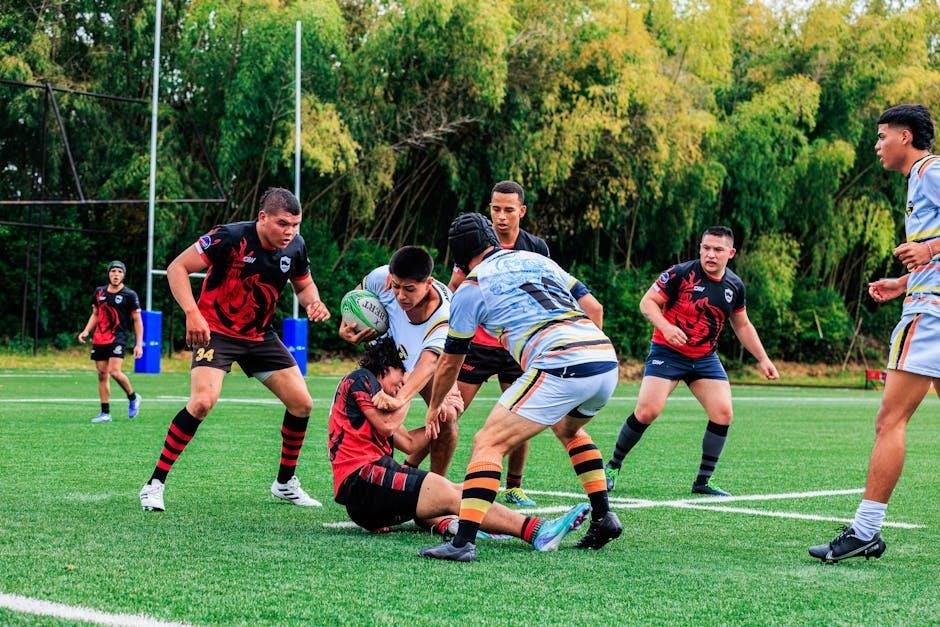
Proprioceptive exercises, such as balance board drills, improve joint awareness and reaction time. Regular hamstring strengthening and stretching routines can minimize strain injuries. The increasing participation in Italian rugby, particularly amongst women, underscores the importance of accessible and effective preventative programs. Collaboration between teams, as seen in Sicily, can facilitate knowledge sharing and standardized injury prevention protocols. Utilizing forums to discuss best practices and share exercises can further enhance player safety and longevity within the sport.
Importance of Proper Technique
Executing rugby skills with correct technique is as vital as physical conditioning, significantly reducing injury risk. Tackling, scrummaging, and rucking all demand precise form to distribute forces effectively and avoid undue stress on joints and ligaments. Improper technique not only increases the likelihood of acute injuries but also contributes to chronic wear and tear.
Coaching emphasis should prioritize technique drills alongside strength and conditioning. The growth of rugby in Italy, especially women’s rugby, necessitates qualified coaching staff capable of instilling proper form from the outset. Forums dedicated to rugby discussion highlight the need for shared knowledge and best practices in technique instruction. Regional collaborations, like those emerging in Sicily, can foster a consistent approach to skill development. A comprehensive rugby workout program PDF should therefore integrate technique refinement alongside physical training, ensuring players are both strong and safe.